 Professor Franklin
Chapter 20 · Reading 3 of 3
Testifying as a witness
CHFI domains 2, 4
The review board accepts the corrected report, and charges follow. Months later, the academy’s examiner is called to testify. The defense has filed a motion to exclude the examiner’s opinions about the hardware wallet and the alibi photo, arguing that the methods are unreliable. Before the jury hears anything, the judge will decide whether they are allowed to.
Fact witness and expert witness
A fact witness testifies about what they personally did, saw or heard. An examiner can be a fact witness about the steps taken: “I connected the device, entered the PIN and recorded the screen.” An expert witness may also give opinions based on specialized knowledge: “In my opinion, the photo’s date fields were altered after capture.” Experts must be qualified by knowledge, skill, experience, training or education, and the side calling them must usually disclose their opinions, the basis for them and their qualifications before trial.
Examiners often serve in both roles in the same case, and should know which questions call for which. An examiner who strays from what they observed into opinions they were not disclosed for, or who advocates for one side, damages their credibility and the case.
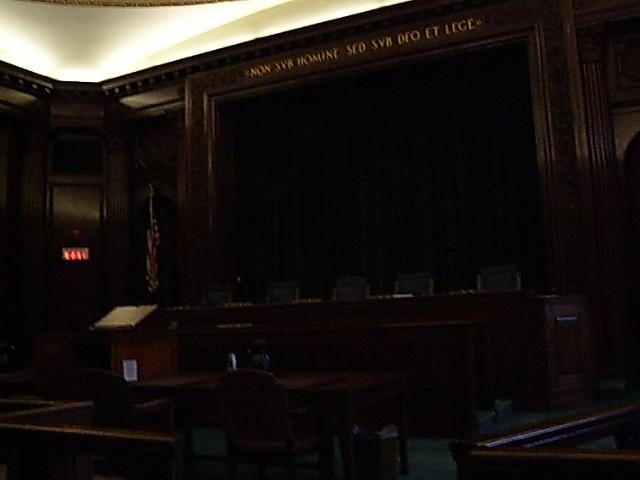

Admissibility: Rule 702, Daubert and Frye
In U.S. federal courts, expert testimony is governed by Federal Rule of Evidence 702. The testimony must help the jury, rest on sufficient facts or data, be the product of reliable principles and methods, and reflect a reliable application of those methods to the case. An amendment that took effect on 1 December 2023 clarified that the party offering the expert must show the court that each requirement is more likely than not met.
Judges act as gatekeepers using the framework from Daubert v. Merrell Dow Pharmaceuticals (1993), which Kumho Tire Co. v. Carmichael (1999) extended to technical and other non-scientific expertise. Many states follow Daubert. Others still apply the older Frye v. United States (1923) standard, which asks whether the method is generally accepted in the relevant scientific community.
| Factor | The academy’s answer |
|---|---|
| Can it be and has it been tested? | Known-answer fixtures for each tool function (Chapter 19); the wallet address derivation can be repeated by anyone with the device |
| Peer review and publication | Published methods for Exif analysis, PRNU and blockchain heuristics; NIST CFTT reports; the case’s own technical review record |
| Known or potential error rate, and standards controlling operation | Fixture results such as 117 of 120 files recovered; lab procedures requiring a second method for decisive findings |
| General acceptance | Hashing, ExifTool and address derivation are standard practice; the detector score is presented only as a supporting check |
The judge admits the testimony about the wallet and the photo’s metadata and menu board. The judge limits testimony about the synthetic-media detector score, finding its error rate on edited photos too poorly established to put to the jury. That outcome is common: well-validated methods come in, and loosely validated ones are excluded or narrowed.
Direct and cross-examination
On direct examination, the examiner explains the methods and findings in plain language, using exhibits prepared in advance, such as the corrected bay 4 timeline and the exhibit map from Chapter 18. On cross-examination, the defense tests the methods, the examiner’s qualifications, the scope of the examination and anything the examiner did not do.
- “The tool is industry standard, so it doesn’t make mistakes.”
- Guessing an answer outside the examination’s scope
- Defending an error instead of acknowledging it
- “We tested this version against known data. It missed 3 of 120 files, all with very long names, and none of the files in this case had such names.”
- “That was outside the scope of my examination.”
- “The draft had an uncorrected time. Peer review caught it, and the report shows both values.”
The defense asks whether the examiner’s draft report contained an error. The honest answer, that it did and peer review corrected it, helps rather than hurts: it shows the lab’s quality controls working. An examiner’s duty is to the court and the evidence, not to either side, and the same standard applies whether the findings help the party that called them or not, as Chapter 1 began.
On the exam, fact witnesses testify to what they did and saw, experts may give opinions, Rule 702 and Daubert make the judge a gatekeeper of reliability, Frye asks about general acceptance, and cross-examination is answered truthfully, within scope and with known error rates. This is the last reading in the course. Return to the course contents to review any chapter.
Inspect the three records, then use the evidence to answer the question.
1. Testing
The method was tested on fixtures with known answers
2. Result
117 of 120 files recovered; 3 long-named files missed
3. Standards
Lab procedure requires a second method for long paths
Apply the reading
On cross-examination, the defense asks whether the parser you used has ever produced a wrong timestamp. How should you answer?
Compare your reasoning
Truthfully and specifically: describe the validation your lab performed, the known limitations and error found, such as display time-zone settings, and the independent manual conversion you did for the decisive value. Do not overstate certainty or claim a tool never errs.