 Professor Franklin
Chapter 17 · Reading 3 of 3
Operational technology and safety
CHFI domains 1, 4, 5, 6
The bay 4 door is driven by a motor that a programmable logic controller (PLC) commands. The PLC’s event log shows no open command between midnight and 06:00, yet the door sensor reported the door open at 02:14:20. Ferrous Valley’s engineers want the controller examined. Its refrigeration system keeps millions of dollars of medicine cold, and an examination that crashes it could cause far more harm than the theft.
What operational technology is
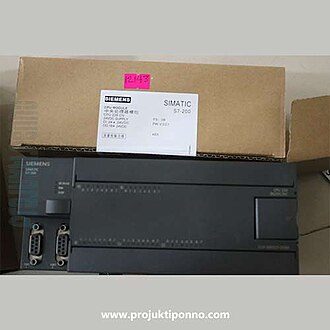
Operational technology (OT) is the hardware and software that monitors and controls physical processes: valves, motors, conveyors, refrigeration, power and water. Its core components include PLCs, rugged computers that read sensors and drive actuators in a continuous loop; human-machine interfaces (HMIs), the screens operators use; engineering workstations, which program the controllers; and historians, databases that record process values over time. Systems that supervise many controllers are often called SCADA or industrial control systems (ICS).

Safety first, then passive collection
In OT, availability and safety come before everything else, including evidence. Many controllers run for years without patches, use protocols such as Modbus that have no authentication, and can misbehave or stop when scanned or queried unexpectedly. Collection plans therefore follow a few rules:
- Agree the plan with the plant’s engineers and safety lead. Nothing is connected to a live controller without them. Nobody stands near the door mechanism during any test.
- Collect passive sources first. The historian’s records, HMI alarm and event logs, the engineering workstation’s project files and logs, and switch mirror-port captures of controller traffic.
- Compare the running program with the approved backup. Read the controller’s program only through the vendor’s engineering software, in a scheduled maintenance window, and compare it with the last approved version to detect changes.
- Record clocks and drift for every device. Controllers and HMIs often have unsynchronized clocks.
What the controller did record
The PLC’s log has no motor command, but its input log shows the manual override input, a key switch beside the door that lets maintenance staff run the door locally, changing state at 02:13:58 by the PLC’s clock. The override bypasses the program’s normal open command, which is why no command appears.
The PLC’s clock is not synchronized. Comparing its displayed time with an NTP reference during collection shows it is 41 seconds fast. A fast clock records events late, so the correction subtracts.
- Bluetooth gateway hears the supervisor-linked watch near bay 4.
- PLC manual-override input set (02:13:58 PLC time, corrected for 41 s fast).
- Door sensor open event, timestamped by the NTP-synchronized gateway.
- Historian: bay 4 temperature rising (historian server time, NTP-synchronized).
The roughly one-minute gap between the override and the sensor event fits a door that takes time to rise far enough to separate the sensor’s magnet. The engineers can test that with the door in a maintenance window.
The engineering workstation and the network
If someone had changed the controller’s program instead, the evidence would be on the engineering workstation: project files with modified logic, the vendor software’s own logs of downloads to the controller, and Windows artifacts showing who used the software. A mirror-port capture would show programming traffic to the controller. Ferrous Valley’s engineering workstation shows no connection to the bay 4 PLC since September, and the running program matches the approved backup, which rules out a logic change.
The preservation plan the chapter asks for lists each collection, its reason and its safety controls: historian export for 00:00 to 06:00, the PLC event and input logs read during the maintenance window, the engineering workstation image, the gateway logs, the companion-app database and the cloud event history. The supported event window runs from the override at 02:13:17 to the temperature rise from 02:16.
On the exam, safety and availability come first in OT, passive sources such as historians and network captures are collected before touching a controller, and controller clocks must be measured, not assumed. The next chapter, Dark-web and cryptocurrency evidence, follows the stolen pallet to a marketplace.
Inspect the three records, then use the evidence to answer the question.
1. PLC event
Manual override at 02:13:58 PLC time
2. Drift
PLC clock measured 41 seconds fast
3. Gateway
Door open 02:14:20 UTC (NTP-synchronized)
Apply the reading
Why would you avoid connecting a laptop and running a vendor diagnostic tool directly on the running door PLC?
Compare your reasoning
Some tools and scans can disrupt or crash older controllers, which could stop refrigeration or move equipment while people are nearby. Coordinate with the plant’s engineers, prefer the historian, network captures and existing backups, and only read from the controller in an approved maintenance window.