 Professor Franklin
Chapter 9 · Reading 4 of 10
Reconciling assets from acquisition to disposal
Security+ SY0-801 · Objectives 4.2
A departing employee hands a laptop to a supervisor. Finance closes its purchase record. An endpoint agent stops sending events. A month later the same device certificate appears in an access log. Before declaring an intrusion, find out which transitions were actually verified.
Build an inventory that can answer questions
An asset inventory record connects a stable identifier with an owner, custodian, location, purpose, classification, software and lifecycle state. Record expected support dates and dependencies at acquisition. Hostnames, IP addresses and display names can change or be reused. For a virtual machine, maintain provider instance identity and tenant context. For data, identify owners and authoritative stores as well as copies, retention requirements and access paths.
Reconcile procurement, enrollment, cloud billing and observed network presence. Each source has a blind spot. A purchased laptop may still be on a shelf. A managed agent may be offline. Ephemeral compute can be created and destroyed between scans. A SaaS subscription can store sensitive data without any local device. Investigate mismatches with the custodian and document confidence instead of silently dropping stale entries.
Make lifecycle transitions verifiable
- ClearOverwrite data to defeat simple, keyboard-level recovery. Media can be reused.
- PurgeDefeat laboratory recovery, for example with a drive’s built-in secure erase. Media can often be reused.
- DestroyShred, disintegrate or incinerate. Media cannot be reused.
- Cryptographic eraseDestroy the keys instead of the data. Only works if everything was encrypted and every key copy is gone.
At assignment, record who acknowledged receipt and which baseline applied. At transfer, review inherited permissions and data. At retirement, remove network and application access, reclaim licenses, revoke device certificates and determine the correct media disposition. Sanitization removes data so it cannot be recovered. NIST SP 800-88 describes three levels. Clearing overwrites data against simple recovery. Purging defeats laboratory recovery, for example through a drive’s built-in secure erase. Destruction physically shreds, disintegrates or incinerates the media. They offer different levels of assurance depending on media, sensitivity and reuse. Cryptographic erasure destroys the encryption keys instead of the data. It depends on the relevant data having been encrypted and the required keys being reliably eliminated.
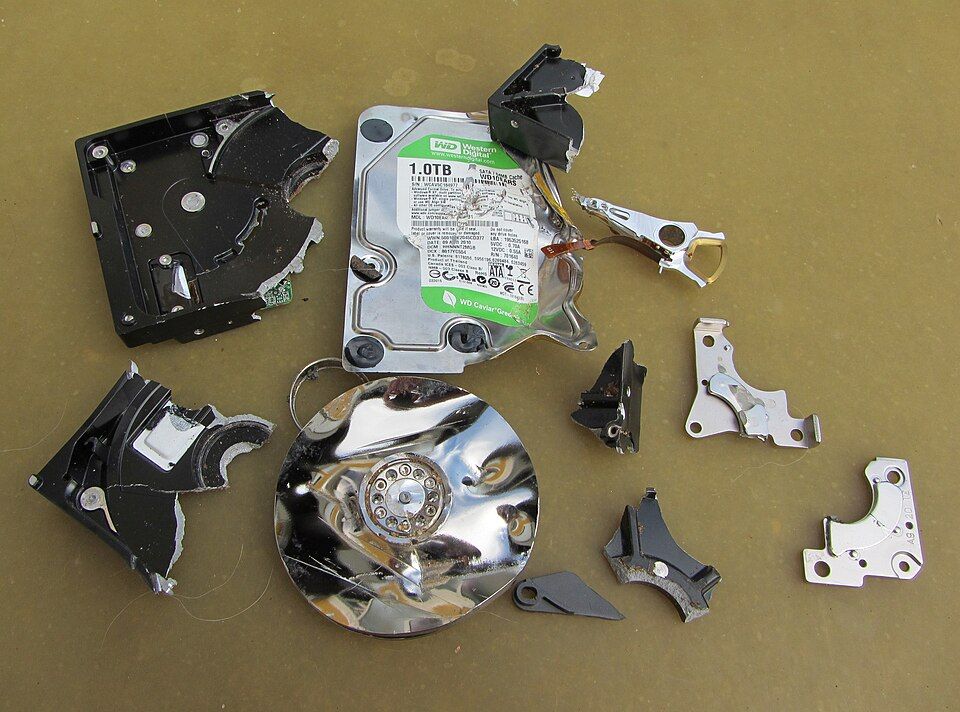

A certificate of destruction should identify the actual serial number, method, date and responsible party. Compare the evidence with the register and confirm backups or replicas have their own retention treatment. Report coverage using a defined population, such as managed laptops with a current endpoint report divided by assigned in-service laptops. Record unknowns separately so missing evidence remains visible.
Count unknown devices explicitly
A dashboard reports encryption on 98 of 100 enrolled laptops. Purchasing and custody records list 112 laptops in active service. For the enrolled population the observed rate is 98 percent. For the full assigned population only 98 of 112 have confirmed encryption from that source. The remaining twelve outside enrollment have unknown status. They might be encrypted, but the team lacks the expected evidence.
12 laptops are outside enrollment and their status is unknown, not unencrypted. Report them as their own line.
Report both denominators and name the owner of reconciliation. Otherwise a department could appear to improve its rate simply by losing visibility of difficult devices. The same logic applies to data stores, subscriptions and temporary cloud systems. Each metric should state what population it represents and what would cause an asset to disappear from it.
Reconcile an awkward discrepancy
The return receipt and access event might refer to different devices with reused names. Compare the serial, management ID and certificate identity. Check the collection time and whether the event arrived late. If the identity really remained usable after return, identify all services that trusted it and restrict the affected credential through the authorized process. Track the equipment separately from the credential. The laptop could be inside a locked cabinet while an exported credential persists elsewhere. This distinction matters when the vulnerability team calculates coverage from the asset register, as the next reading, Prioritizing findings and proving remediation, shows.
Inspect the three records, then use the evidence to answer the question.
1. Register
Register lists laptop LT9 assigned to a former employee.
2. Management system
Agent last reported before the employee left.
3. Disposition record
Recycler receipt lists LT6 and LT8 only.
Apply the reading
What makes a disposal receipt relevant to a specific device?
Compare your reasoning
Match the stable serial or asset identity and verify the method, date and responsible party.